|
Jakość - Normalizacja - Certyfikacja
Dodatek lobbingowy do RZECZPOSPOLITEJ.
9 listopada 2007 r.
po polsku
Standardization - opportunities and prospects of unifying diversity in the economy
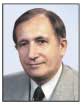
Dr. Tomasz Henryk Schweitzer, vice-president of the Polish Committee for Standardization (PCS)
 The World Standardization day, celebrated on the 14th of October, provides a good opportunity for reflections and strategic conclusions. The status of standardization in Poland is quite paradoxal. While the standards changed quite a long time ago, the system of Polish standardization remains unchanged. The World Standardization day, celebrated on the 14th of October, provides a good opportunity for reflections and strategic conclusions. The status of standardization in Poland is quite paradoxal. While the standards changed quite a long time ago, the system of Polish standardization remains unchanged.
This year has been marked by declarations of profound changes in the existing system. The works on a draft of the new standardization statute had been started but, due to causes independent of the PCS, they were discontinued. They may, of course, be resumed. The Polish standardization system is in a critical point and only a new statute will make it possible to complete its transformation, which began in 1993, from an official (obligatory) to a social (voluntary) system.
The changes initiated by the draft statute prevent a return to the obligatory system, which is a condition for Poland's participation in the global free market economy. Now is the time to base our thinking and actions on voluntary approach which constitutes a basis for standardization both in Europe and worldwide.
Thus, the functionality of the standardization system, generally perceived as a set of regulations and rules, depends most of all on its participants' awareness. Developing and shaping this awareness is the PCS's task for the upcoming years, as without it a transformation of the system will never be complete. While awaiting systemic changes which are needed to prevent the PCS and the standardization activities from becoming incapacitated, we are preparing to function in the new environment, in spite of the discontinuation of works on the draft statute. We have involved in our preparations the technical committees (TC) cooperating with the PCS; they are collective institutions focusing in their work on particular areas and involving experts delegated by relevant groups (industrial, scientific, economic, employer associations, trade unions, or consumer groups). It is the technical committees who are responsible for elaborating standards and for their content. The PCS is constantly increasing their autonomy. Any interested company or institution can participate in the works of a TC. After the new statute comes into force, the scope of independence of the TC's will be even broader as the PCS representatives in committees will only coordinate their standardization work. I highly encourage you to cooperate with the committees. It is worthwhile! I particularly encourage representatives of the industry; in Poland they currently constitute a mere 23% of technical committee members, while in Western Europe that number is approximately 90%. After all, investment in standardization does bring measurable results. Such investment has the highest rate of return: 1:30 or 1: 40. Besides, TC experts are delegated by the PCS to works on the European level. This is another way for institutions to profit as it allows them not only to have a say in the formulation of the content of the norm, but also gives them early access to information, which in turn facilitates proper planning of investments.
Currently the PCS is a government institution. The draft statute changes its status to an association of legal persons. The PCS will obtain the status of a legal person and will be financially self-supporting. Members of the PCS will be obligated to pay membership fees and only members of the PCS will be allowed to delegate representatives to work in technical committees.
Most European standardization organizations, members of CEN and CENELEC, have a similar status.
I kindly ask all participants of the standardization process: manufacturers and consumers, authorities, economic and trade organizations, employers and employees, and academic and research institutions, for their support in the process of implementing a modern standardization system in Poland. The transformation of the system is important also to those who are skeptical about the proposed changes. I believe that soon even the skeptics will find out that the new system provides a higher level of standardization and a higher quality of standards. We should remember that the change of the system is not only in the interest of the Polish Committee for Standardization. For the PCS it will result in a departure from being financed by the government and a switch to the uncertainty of economic independence. Nevertheless, I am aware of the inevitability of this change and I take a full responsibility for all its consequences. The participants of standardization, on the other hand, must understand and accept the fact that participation in standardization work is beneficial to them, and that they must pay for these benefits, because there is no reason that the state should be obliged to pay for them.
Polish standardization is stuck at a point where, without systemic changes provided for in the new statute, it will face stagnation and, consequently, a lack of protection of Poland's interests in the European economy and standardization. By introducing state of the art European standards we will get the opportunity to establish a new quality for all makers and beneficiaries of Polish standardization. n

Polski Komitet Normalizacyjny
www.pkn.pl
|