|
Jakość - Normalizacja - Certyfikacja
Dodatek lobbingowy do "RZECZPOSPOLITEJ".
19 czerwca 2008 r.
po polsku
The Polish Centre for Testing and Certification (Polskie Centrum Badań i Certyfikacji S.A.) becomes the leader of certification bodies
Once the "Q" mark, nowadays ISO 9000
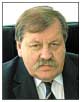
An interview with Wojciech Henrykowski,
the President of the Polish Centre for Testing and Certification
|
Actions for quality
The Polish Centre for Testing and Certification provides services within the scope of 10 EU directives, beginning with safety of toys, through machinery and electrical equipment or building products, to energy efficiency of refrigerators and freezers. Since 2004 it has granted a Community ecological mark Ecolabel. Besides, it has been involved in the certification of management systems, the systems of product certification and testing, the organization of training courses, as well as the assessment of the conformity of products and systems according to the obtained notification. During 15 years the Polish Centre for Testing and Certification has issued almost 4200 certificates, 53 per cent of which have been ISO 9001 certificates, 17 per cent - ISO 22000 certificates and 11 per cent - ISO 14001 certificates. The Polish Centre for Testing and Certification co-operates with international organizations, such as: CCA, IECEE, EOQ and EFQM, BRC, HDE (IFS standards). Through its foreign partners it is present in Turkey, China and Romania. The Polish Centre for Testing and Certification is the winner of numerous awards, including Polska Nagroda Jakości (Polish Quality Award) 2005, Super Biały Tygrys (Super White Tiger Award) 2006, Polska Honorowa Nagroda Jakości (Polish Merit Quality Award) 2007. The company publishes a quarterly ABC Jakości (ABC of Quality). More information available at www.pcbc.gov.pl n
|
The 50th anniversary of the Polish Centre for Testing and Certification is approaching. Half a century ago the Office for Quality Mark was established which has survived in various forms until now. Is the modern Centre totally different in character from the institution that appeared half a century ago?
 50 years of existence proves that both in 1958 and today it has been quality improvement that has been focused on. But this anniversary is also a time for reflection. The company has functioned in two periods, namely before and after 1989. In 1974 the original Office for Quality Mark turned into the Central Office for Product Quality. Its objectives involved promoting the quality of products bearing the "1" and "Q" marks. True, this was an attempt to influence quality via administration, but it allowed products of high quality level to appear on our market. I have had a "Q" marked radio to this day, and it is still working. In 1898 a time for changes came. We had to adjust our activity as well as creating quality in companies to the EU standards. It was a new approach, oriented towards the market system. From then on, the state has focused exclusively on health and safety of its citizens, while quality of products was to be verified by the market. In 1993, still functioning under the old name, we issued first certificates of quality systems, which were in accordance with the requirements of the ISO 9000 standard. One year later, on the strength of the Law on Testing and Certification, our institution was transformed into the Polish Centre for Testing and Certification, subordinate directly to the Prime Minister. Today we can say we have succeeded, having approximately 45 per cent of the certificate market, for 46 bodies functioning in the same field. 50 years of existence proves that both in 1958 and today it has been quality improvement that has been focused on. But this anniversary is also a time for reflection. The company has functioned in two periods, namely before and after 1989. In 1974 the original Office for Quality Mark turned into the Central Office for Product Quality. Its objectives involved promoting the quality of products bearing the "1" and "Q" marks. True, this was an attempt to influence quality via administration, but it allowed products of high quality level to appear on our market. I have had a "Q" marked radio to this day, and it is still working. In 1898 a time for changes came. We had to adjust our activity as well as creating quality in companies to the EU standards. It was a new approach, oriented towards the market system. From then on, the state has focused exclusively on health and safety of its citizens, while quality of products was to be verified by the market. In 1993, still functioning under the old name, we issued first certificates of quality systems, which were in accordance with the requirements of the ISO 9000 standard. One year later, on the strength of the Law on Testing and Certification, our institution was transformed into the Polish Centre for Testing and Certification, subordinate directly to the Prime Minister. Today we can say we have succeeded, having approximately 45 per cent of the certificate market, for 46 bodies functioning in the same field.
What is the difference between quality management systems from the beginning of the 90s and today?
Differences result from the occurrence of higher requirements. In 1987, 9000 series of standards appeared but already in 1994 the second edition of this standard was introduced, followed by the third one in 2000. This latest one turned out to be revolutionary, as it introduced elements of the TQM system. They referred in particular to continuous development through inspections, audits, correction actions and customer satisfaction surveys. We are now waiting for the next version of ISO 9000, which is expected to come into effect in 2009 at the latest. We have noticed that companies which implemented the third version of ISO 9000 have been really successful. It should be added that in spite of alterations ISO 9000 standard still remains relevant. What turned out to be big news were the ISO 14000 system referring to the environment and the ISO 18000 system related to safety. So, companies can implement a quality management system, and then that of environment or safety management, or all three simultaneously. It is for this reason that we talk about integrated systems. Depending on a sector, standards can be even more extended, for example in the food sector, also ISO 22000 can be considered.
Is there any system which the Polish Centre for Testing and Certification has not managed to introduce to the Polish market?
We have not managed to establish co-operation with the IATA automobile manufacturers association which decides who is going to certify the system of TS standards on the automotive market. Only bodies authorised by IATA are allowed to do it. But we hope to break a deadlock and start functioning also in this sector.
But in the last two years the Polish Centre for Testing and Certification has started to promote another system, namely "Counteracting Corruption Risks". Is that possible?
The anti-corruption system has been developed together with the Polish Chamber of Commerce. The first institution which obtained our certificate was the Ministry of Justice. To this day it has been obtained by 4 organizations, but soon there will be more, since this system and its implementation arouse great interest. Corruption cannot be fully removed but the risk can be minimised. A situation when a customer comes to a particular office worker who makes decisions about this customer's business, is a classic example.
Is it possible to control dangers in other fields in a similar way?
Yes, it is. For example, the ISO 27000 system has been developed which refers to the safety of information. The branch of IT has become very popular in our lives but on the other hand it has also brought the danger of revealing information concerning us or our company. By introducing certain standards we put a lot of effort into reducing the danger of getting access to our data by unauthorised people. There is also the SA 8000 standard, known as social, which looks after the rights of the employed.
What does the Polish Centre for Testing and Certification experience during audits conducted after the certification of a company?
During such audits we check what has been changed in the company. We can check whether the company has changed its technology or if it has introduced new cost-reducing solutions etc. Our experience shows that each audit motivates the company to improve quality, which, in turn, leads to the success of the market. It is for these reasons that the largest and the most significant companies of the world have implemented various systems and are proud of their certificates. That is why Polish companies have to be told again and again that if they want to improve management methods they have to obtain appropriate tools.
The Polish Centre for Testing and Certification is a State Treasury company. Are you going to face privatization?
We are a commercial law company but our activity is closer to that of a Public Utility Organization. Our aim is not to earn a large profit but rather to create a quality-oriented approach. Therefore, we offer a varied price list and discounts depending on the size of the company. So far we have also instructed 60000 people in quality improvement. We co-operate with governmental authorities in developing new strategic solutions. Considering our mission, the Polish Centre for Testing and Certification has not been included in the group expecting privatization.
Thank you for the interview.
Maria Weber
|